Commercial Roof Repair in Fort Smith
Commercial Roofing Services
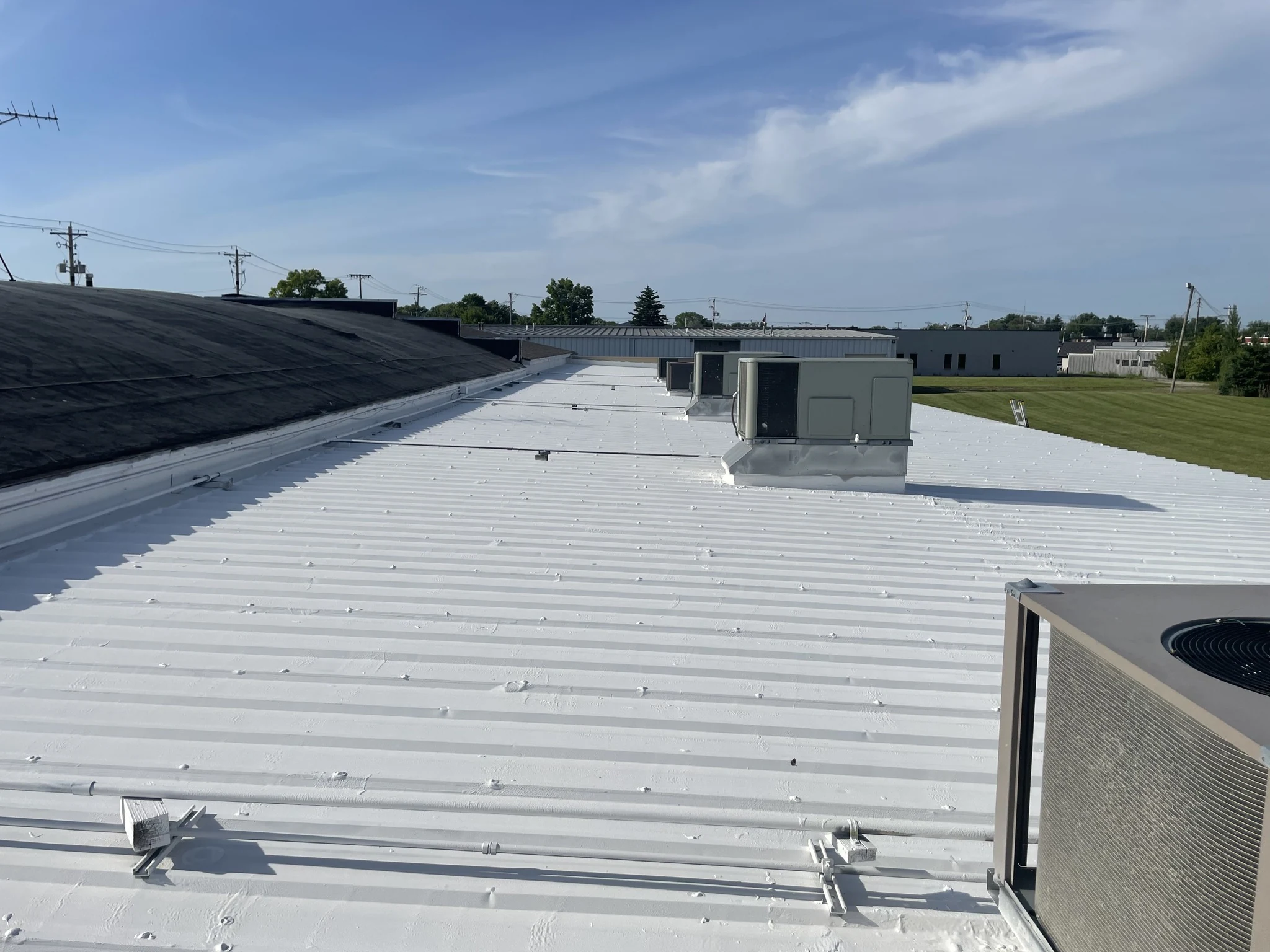
Commercial Roof Leak Repair in Fort Smith
The scope documents leak sources, repair boundaries, photos, and priorities so Fort Smith owners can separate immediate stabilization from longer-term capital work. A ceiling stain rarely sits above the actual leak. Water travels along deck seams, insulation joints, and structural members before it drips somewhere convenient, so the first job on any leak call is finding the real entry point, not patching the spot below the stain. We trace leaks systematically and fix the source, not the symptom.
Where Leaks Actually Start
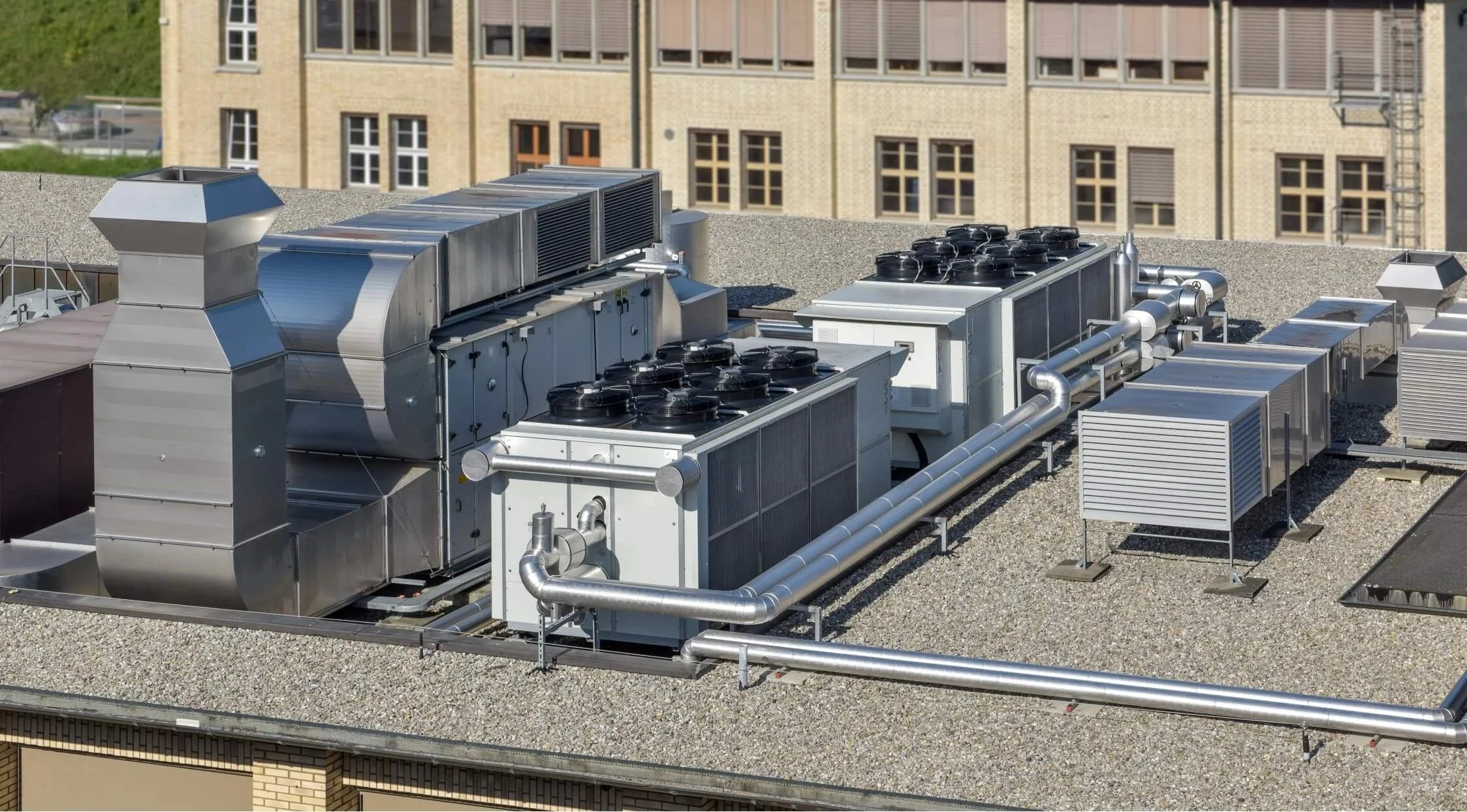
On a low-slope commercial roof, the field membrane itself is rarely the problem. Penetrations are. HVAC curbs, pipe boots, pitch pans around conduit, and old abandoned equipment mounts are where seals fail first, usually because sealant has aged out or a curb was never properly flashed to begin with. Field seams come next, particularly on older membranes where heat-weld or adhesive bond has started to lift at the edges.
Parapet walls and roof-to-wall transitions are their own category. Counterflashing that has pulled away from a wall lets wind-driven rain behind the membrane during a storm, and that kind of leak often only shows up when wind direction lines up a certain way, which makes it harder for building staff to pin down without someone tracing it from the roof.
Seasonal Patterns Worth Knowing
Spring storm season brings sideways rain and hail impacts that can open small punctures in aged membrane, and those leaks often do not show up inside for days, after enough water has pooled and worked through insulation. Winter brings a different problem: ice buildup around drains and low points can back water up under lapped seams that would shed normal rainfall just fine.
We ask about timing when a leak call comes in, because a leak that started during a wind event points us toward the perimeter and penetrations first, while a leak that shows up during a slow thaw after an ice storm points us toward drainage and low points.
Interior Tracking vs. the Real Source
Interior water staining and the actual roof penetration can be twenty or thirty feet apart, especially on a roof with steel deck where water runs along the flutes before finding a seam or fastener to drip through. We do not chase the stain directly above a leak call. We inspect the roof section above and upslope of the interior damage, checking penetrations, seams, and drainage in that whole area rather than guessing at a single spot.
On buildings with a history of repeat leak calls in the same general area, we recommend an infrared or moisture scan of that section to check for insulation that has already absorbed water, since a membrane patch over wet insulation will not hold for long.
Repair vs. When a Leak Signals Something Bigger
Most leak calls are legitimately a repair: reseal a curb, replace a section of failed sealant, patch a puncture, re-lap a seam. We handle those on the visit or with a short follow-up for material. But a roof generating leak calls every few months in different spots is usually telling you the membrane itself is past its service life, and we say so directly instead of running a string of billable patches on a roof that needs replacement.
Leaks That Follow a Storm Event
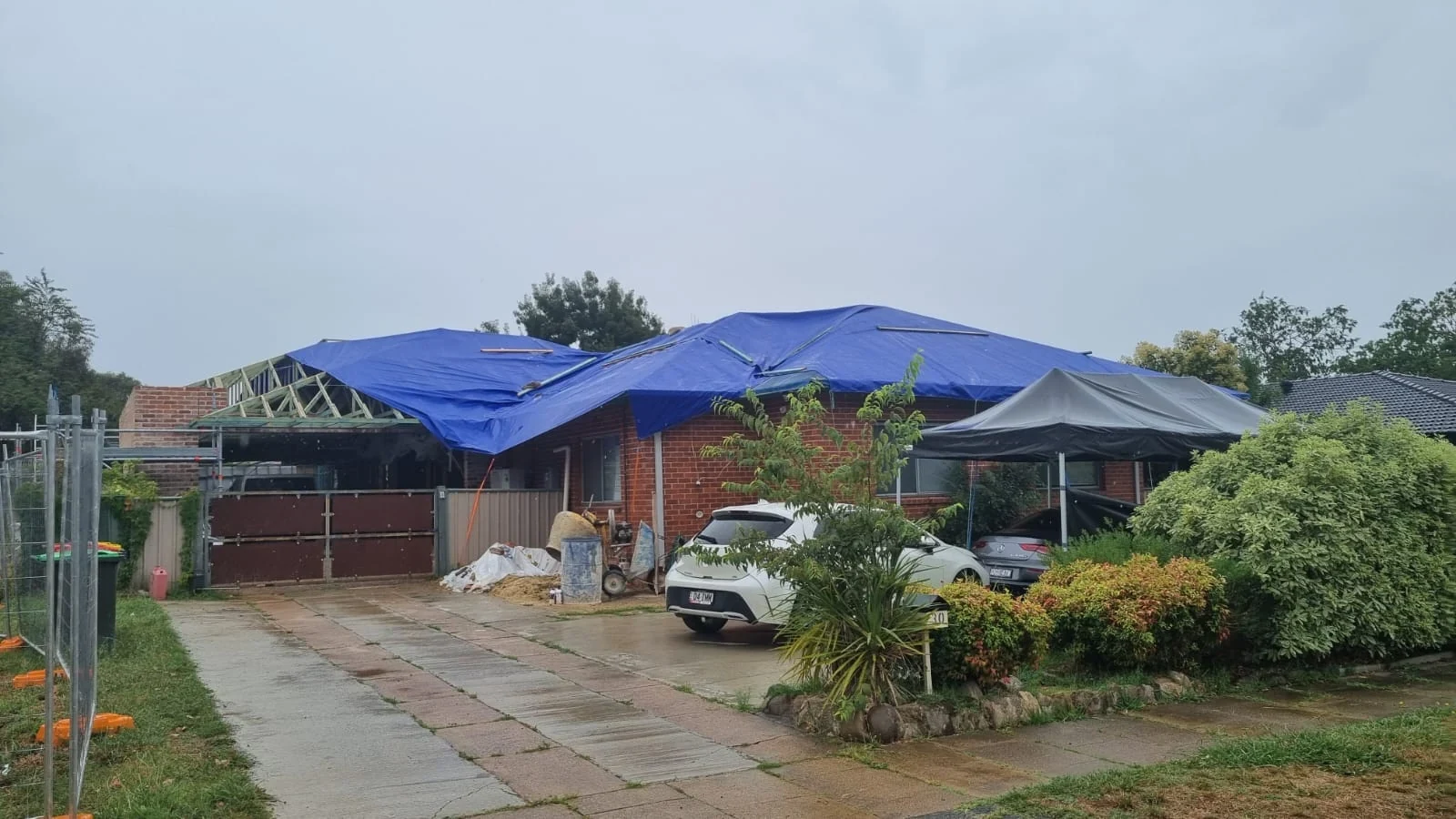
A leak call that starts right after a wind or hail event usually has a straightforward explanation once we get eyes on the roof: a lifted seam at the perimeter, a fresh puncture in the field, or a curb flashing torn loose in the gusts. We treat these calls with more urgency than a slow, unexplained drip, since storm-related openings tend to worsen quickly if the next system moves through before repair happens.
Not every storm-adjacent leak is actually storm damage. Sometimes a repair that was already failing gets exposed by wind pressure that finally pushes water through a weak point that was there beforehand. We look at the specific failure mode before attributing it to the storm, since that distinction matters if documentation is going to support an insurance claim later.
What a Leak Repair Visit Includes
- Interior inspection to establish the general leak area and timing pattern
- Roof-side inspection of penetrations, seams, and drainage upslope of the interior damage
- Moisture scan of the affected section when repeat leaks or wet insulation are suspected
- Repair of the identified source, whether that is a curb, seam, pitch pan, or flashing
- Photo documentation of the failure point and the completed repair
- A straight assessment of whether the roof needs more than a patch
Leak Repair Questions From Fort Smith Property Managers
Why does the leak show up somewhere different than the actual roof damage?
Water follows the path of least resistance along deck flutes, insulation joints, and structural framing before it drips through the ceiling, so interior staining can be well away from the actual penetration or seam failure.
Can you fix a leak the same day you inspect it?
Often yes, for straightforward penetration or seam repairs. Leaks tied to wet insulation, deteriorated flashing runs, or deck damage usually need a follow-up visit once we scope the full extent of the repair.
Do hailstorms cause leaks that show up later instead of right away?
Yes. A small puncture or membrane bruise from hail can take days or weeks to leak through, especially if it is above a low point where water has to accumulate before it finds the opening.
How do ice storms cause roof leaks here?
Ice buildup around drains and roof edges can dam water up behind it, forcing water under seams and flashing that would otherwise shed normal rainfall without issue.
How many leak calls before you recommend replacement instead of repair?
There is no fixed number, but repeat leaks in different areas of the same roof within a short window usually means the membrane is failing across multiple areas, not one isolated point, and we will tell you that instead of continuing to patch.
Document the condition before choosing the scope
The core deliverable is a record of the affected interior zone, roof-area map, repair history, membrane condition, wet-area indicators, photographs, test locations, and the exact limits of the proposed repair. Commercial Roofers of Fort Smith should be able to hand that record to ownership, a facility manager, or another contractor without a separate verbal explanation. During the visit, the technician should trace the water path from the interior evidence back through roof elevations, seams, penetrations, curbs, walls, edges, and drains instead of sealing the first suspicious detail. Wide views, detail views, measurements, markings, and interior references make the findings reproducible instead of dependent on memory. Temporary protection, permanent repair, routine maintenance, and capital recommendations belong in separate sections. This keeps a successful dry-in from being mistaken for the completed repair and lets competing proposals be compared on the same basis.
Treat each roof assembly on its own terms
A detail that is repairable on Modified Bitumen Systems may require different preparation or materials on Spray Polyurethane Foam or EPDM Black. Existing layers, surfacing, attachment, and earlier repair products matter before new materials are selected. Record membrane type, surfacing, insulation and cover-board clues, attachment, flashings, penetrations, edges, and earlier repairs. If the assembly cannot be confirmed visually, say so and define the core or document review needed to confirm it. The final comparison should show which materials can accept repair or restoration, which areas need removal, and which unknowns could change the scope. Product preference comes after those conditions are established.
Roof work has to fit real operations
A technically correct detail is only part of the job at Fort Smith properties such as Manufacturing Operators, Insurance Restoration, and Government Public Sector. The plan also has to protect people, inventory, equipment, and normal access below the roof. Access and protection notes should cover ladders or hatches, staging, falling-object zones, odor and noise, equipment clearances, daily cleanup, weather stops, and the rooms directly below openings or test cuts. Operating controls are roof-quality controls. Water, debris, odor, noise, or an unsecured access point can harm the owner even when the installed detail itself is correct, so those risks need owners and closeout checks.
Make repair, restoration, and replacement distinct decisions
The decision point is whether the defect is isolated, whether trapped moisture changes the scope, and whether continued spot repair remains defensible. The evidence may support a small permanent repair, a broader corrective scope, a restoration evaluation, recover design, or tear-off, but the report needs to show why. Compare the distribution of wet materials, attachment and deck concerns, drainage, detail density, repair frequency, disruption, expected ownership period, energy goals, code assumptions, and warranty requirements. Cost without those differences is not a lifecycle comparison. A smaller scope is not automatically prudent, and a larger scope is not automatically safer. The defensible option is the one whose boundaries match the documented condition and the owner's operating requirements.
Turn the visit into a usable next step
The work becomes more valuable when it leads to an inspection that separates an isolated repair from restoration, recover, or replacement planning. A service call, inspection, and capital project should use one continuous property and roof-area history. For one building, that history makes the next visit faster and reveals whether a repair held. Across a portfolio, it lets ownership rank roofs by condition, operational risk, repair spending, and capital timing instead of reacting to the newest ceiling stain. The result is more than a completed patch or proposal. It is a controlled sequence from immediate response to documented condition, from condition to an appropriate option, and from that option to scheduled stewardship of the roof asset.
A useful response starts before roof access
Before dispatch, collect the address, responsible building contact, safe access route, occupied area below the problem, time and behavior of the leak, known roof type, and any temporary protection already attempted at the Fort Smith property. Interior photographs can preserve stain limits and active-drip locations before ceiling materials are moved. Roof photographs from facility staff may help with orientation, but they do not replace safe field verification or authorize untrained personnel to enter the roof. Clear intake notes reduce wasted roof time and prevent the handoff from losing urgent details. They also create the first event in the roof history that later inspections and repair records can reference.
Price the known work without hiding the unknowns
A proposal should distinguish verified quantities from allowances and investigation from construction. Roof area, repair limits, test cuts, wet-material removal, deck repair, drain work, equipment coordination, and interior protection can carry different pricing certainty. Schedule assumptions also belong beside price: weather windows, material lead time, permits, shutdowns, tenant coordination, daily dry-in, and access restrictions. An unexplained low number can become an expensive sequence of changes if these constraints are omitted. Closeout requirements should be priced as part of the work: final photographs, repair locations, warranty or material records, open punch items, and the next recommended inspection. Those documents keep the completed scope connected to the roof plan.
How Fort Smith operating conditions shape the review
A Fort Smith roof review has to account for severe thunderstorms, hail, wind, high heat, and concentrated heavy rainfall. Those conditions affect access, observation timing, drying, and temporary protection before they affect the final recommendation. Start with the room, ceiling grid, equipment, wall line, and time of entry, then carry those coordinates to the roof. Comparing high and low points, rooftop details, prior patches, and flow paths is more reliable than standing over the first wet-looking surface. A useful report does not hide uncertainty. It names the unverified areas, explains why they were inaccessible, and states which follow-up observation or test would resolve the question.
Fort Smith decision checklist
- Map the interior symptom to a named roof area before selecting a repair detail.
- Record temporary measures separately from permanent work and list every open item.
- Verify drainage, penetrations, walls, edges, earlier repairs, and transitions around the affected area.
- State the observed roof assembly, unknown construction, access limits, and testing assumptions.
- Connect the recommendation to repair, restoration, replacement, maintenance, or capital-planning thresholds.
- Set the next inspection or follow-up date so the roof history continues after this visit.
Commercial roof decision questions
Does this condition automatically mean the roof must be replaced?
No. The review should establish whether the defect is isolated, whether trapped moisture changes the scope, and whether continued spot repair remains defensible. Replacement becomes a defensible recommendation only when the field evidence, moisture, assembly condition, repair history, deck or attachment concerns, and lifecycle comparison support it.
What should the Fort Smith roof scope document?
It should document the affected interior zone, roof-area map, repair history, membrane condition, wet-area indicators, photographs, test locations, and the exact limits of the proposed repair. It should also label temporary and permanent work separately, state assumptions and exclusions, and identify the inspection or service step that follows the current scope.
How does an urgent call become a maintenance or capital plan?
The immediate visit creates the first roof-area record. A follow-up inspection establishes condition and priorities. Completed repairs, recurring observations, drain service, warranties, and future recommendations are then retained so maintenance stays scheduled and larger work can be placed into the appropriate capital year.
From service call to roof plan
Use the next decision, not the biggest sale.
Stabilize the problem, document the roof, compare the viable paths, and keep the resulting roof history active.