Silicone Roof Coatings in Fort Smith, AR
Commercial Roofing Services
Commercial Roof Restoration and Coating in Fort Smith
Distribution centers and older manufacturing roofs along the ArcBest corridor tend to be dead flat by design, and dead-flat roofs pond water after every storm. Silicone is the one coating chemistry that tolerates standing water without breaking down, which makes it our default recommendation on roofs where ponding is a known, ongoing condition.
Why Ponding Water Rules Out Other Coatings
Acrylic coatings, while cost-effective on sloped roofs, soften and lose adhesion under water that sits for more than a day or two, which describes a lot of large flat roofs after a heavy River Valley storm. Silicone's chemistry doesn't have that vulnerability , it stays stable under prolonged moisture contact, which is why we won't recommend acrylic on a roof with documented ponding areas.
That said, a coating doesn't fix drainage , if a roof ponds because of structural deflection or undersized drains, coating alone buys time but doesn't solve the underlying issue. We're upfront about that distinction before recommending a coating project.
This shows up constantly on the flat distribution roofs along the South 30th Street corridor, where large open membrane fields with minimal slope hold water for days after a heavy River Valley storm if the drains aren't sized generously to begin with.
Restoration Instead of Tear-Off
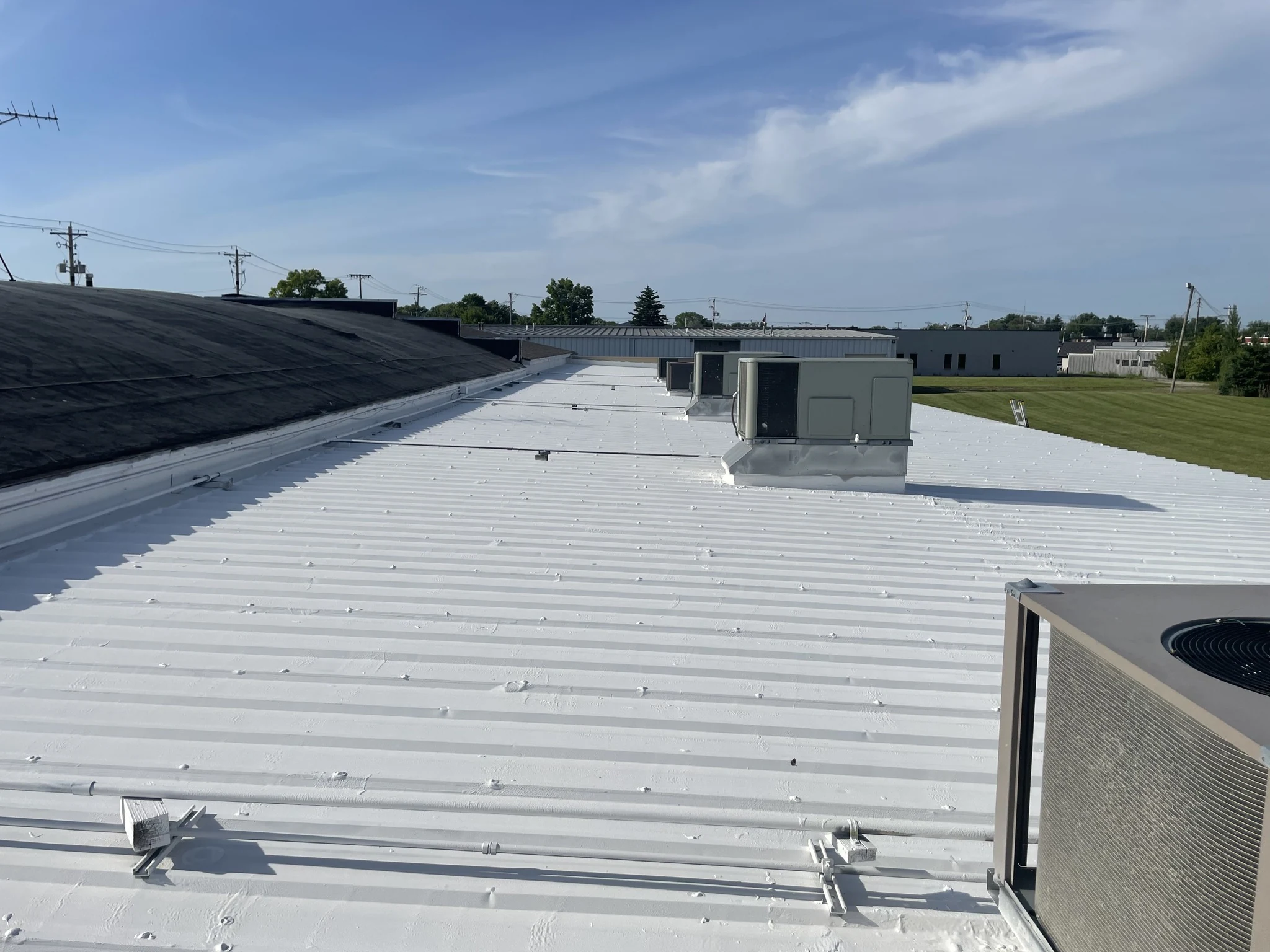
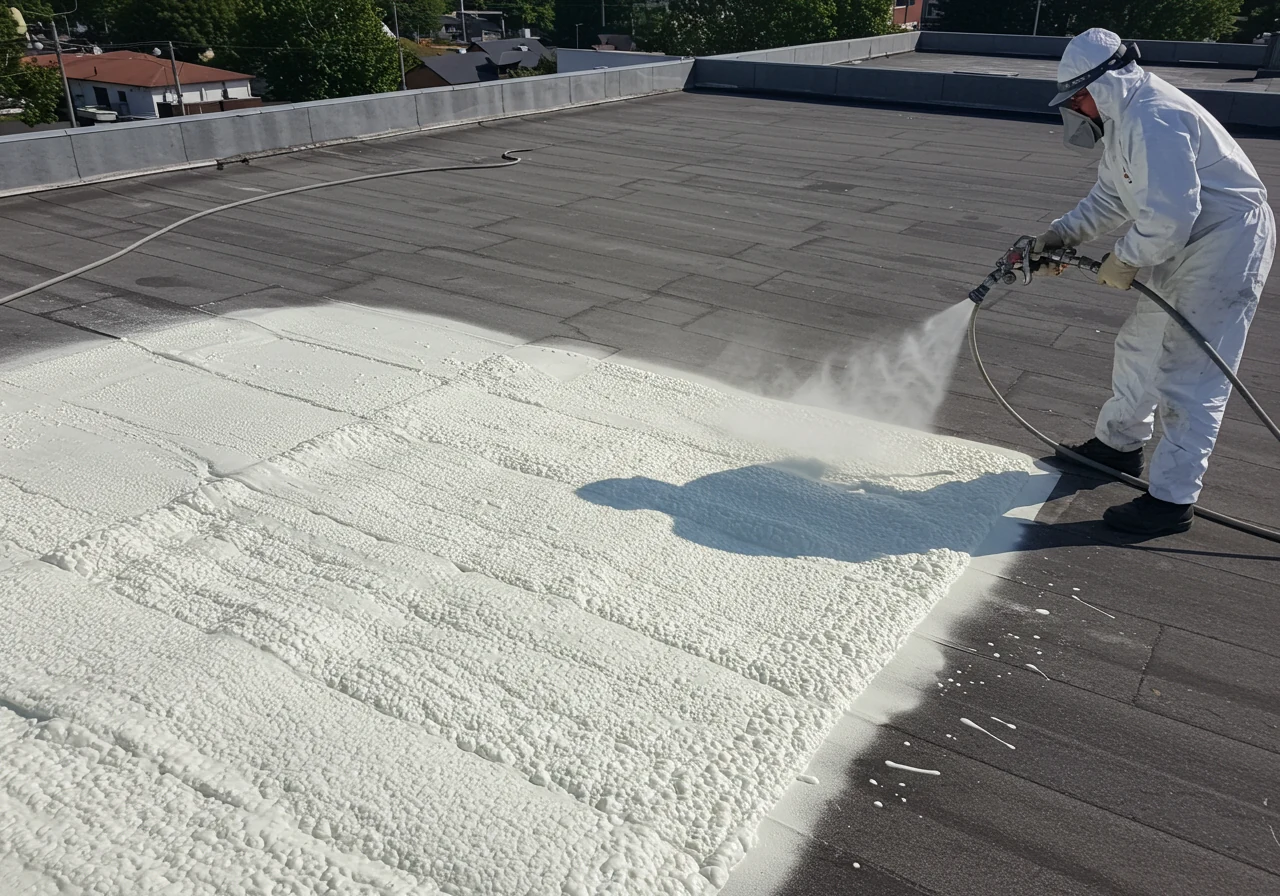
A silicone coating system goes over an existing, structurally sound membrane rather than replacing it, which avoids the disruption, cost, and landfill waste of a full tear-off. For a manufacturing or distribution building where taking the roof out of service is expensive in lost production or operational disruption, that's often the deciding factor.
Coating only makes sense when the existing membrane and deck are structurally sound and dry. A roof with saturated insulation needs tear-off regardless of coating chemistry, since coating over wet insulation just seals moisture in.
UV Reflectivity and Summer Heat Load
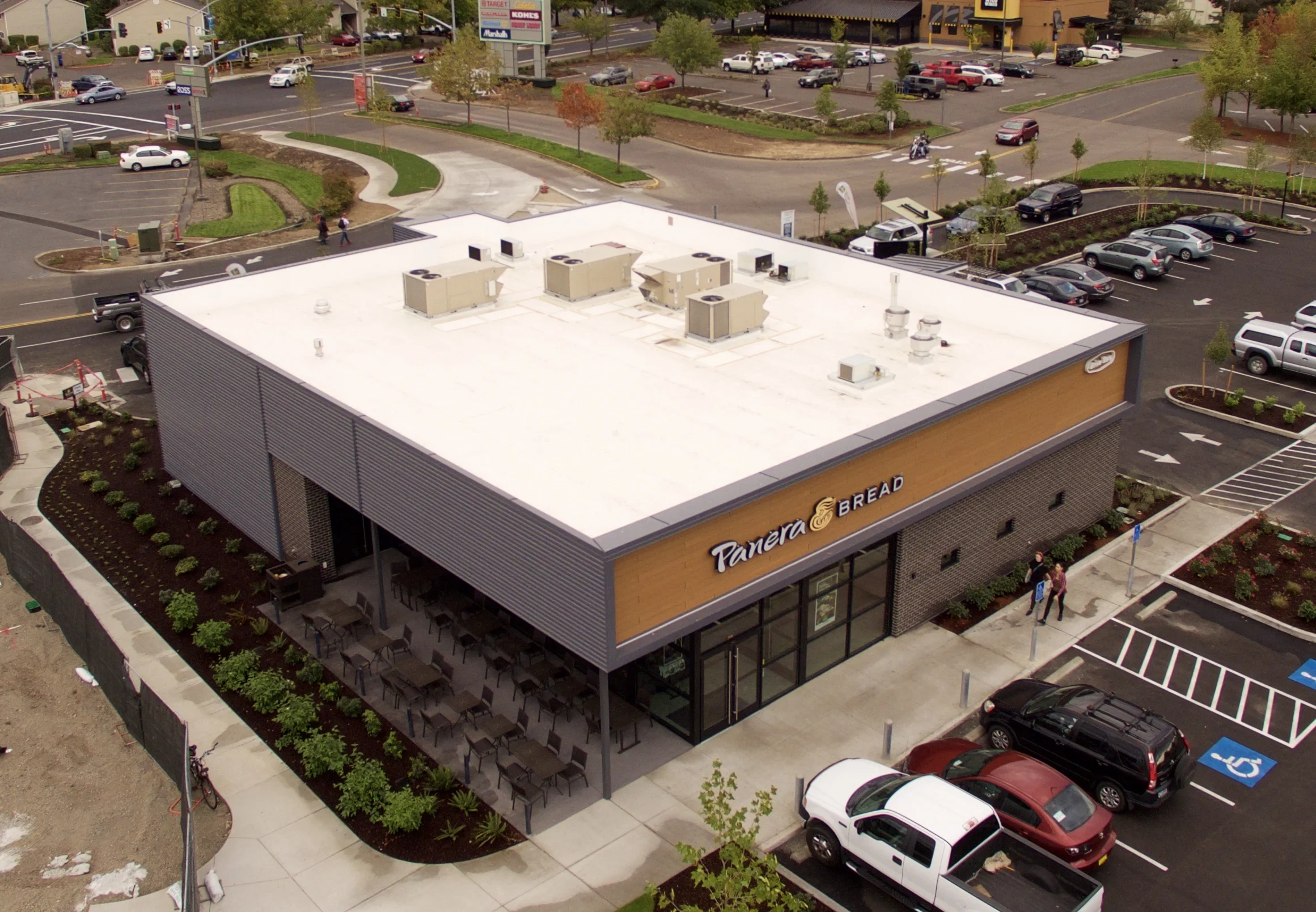
A fresh silicone coating in white or light gray reflects a significant amount of solar heat compared to an aged, chalky, or dark membrane, which reduces rooftop and interior heat load during our hot, humid summers. That reflectivity fades gradually over the coating's service life as it picks up dirt and UV exposure, which is part of why we schedule recoat cycles rather than treating a coating as a one-time, permanent fix.
Moisture Scanning Before Any Coating Job
We don't coat a roof without first confirming the substrate is dry. Infrared or nuclear moisture scanning identifies wet insulation pockets that aren't visible from the surface, and coating over those areas traps moisture and accelerates deck deterioration rather than preventing it. Our pre-coating process typically includes:
- Infrared or nuclear moisture scan across the full roof area
- Physical probing of any suspect zones identified by the scan
- Pressure washing and surface prep to remove chalking and debris
- Seam and flashing repair on the existing membrane before coating
- Primer application where the substrate requires it for adhesion
How Long a Coating System Lasts
Coating thickness (measured in dry mil thickness, not simply the number of coats applied) directly drives service life. We spec coating thickness based on the roof's exposure, ponding history, and how long the owner wants the recoat cycle to run, rather than simply applying a one-size-fits-all thickness.
Coordinating Coating Work Around Rooftop Equipment
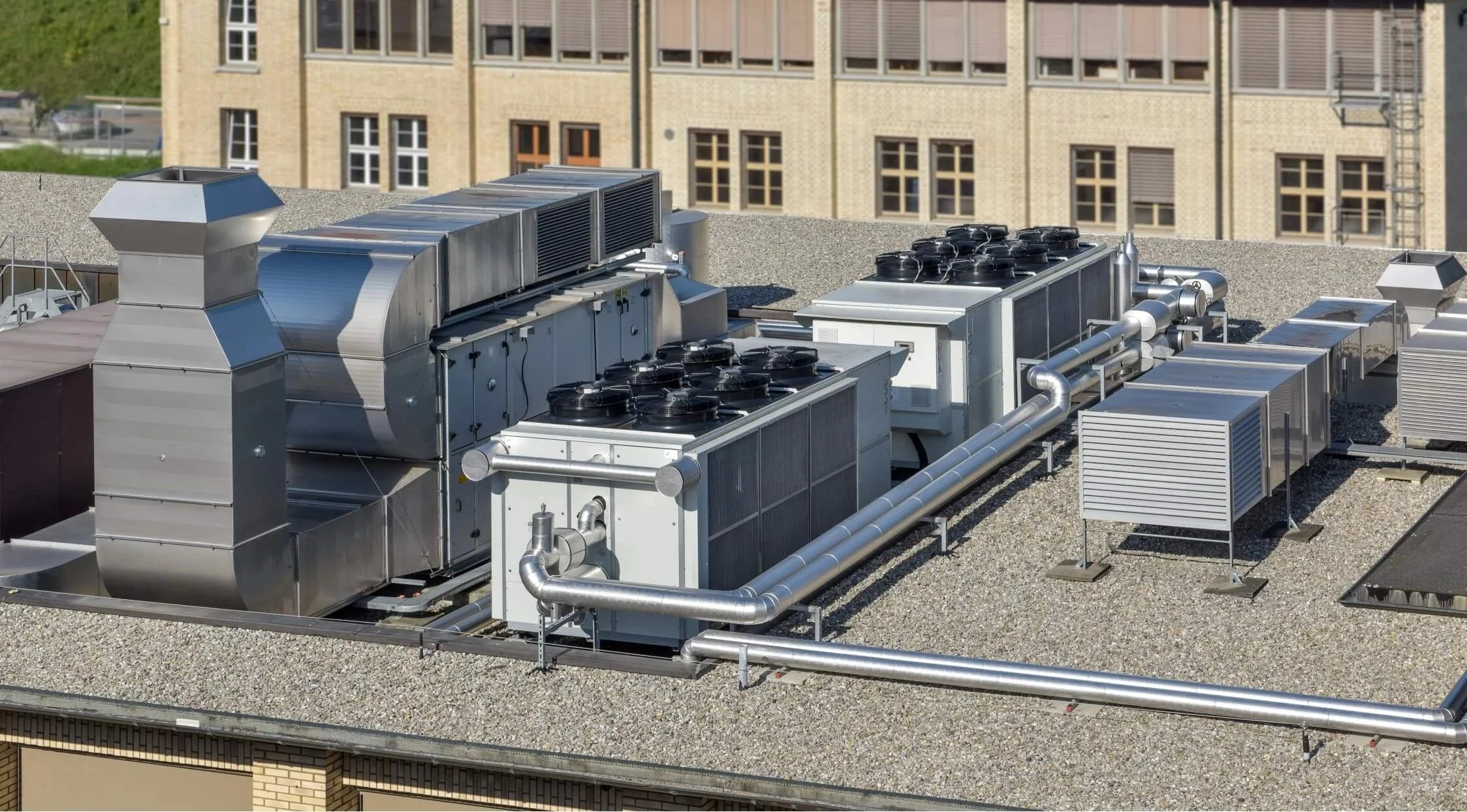
Distribution and manufacturing roofs are rarely empty , rooftop units, exhaust fans, and conduit runs all need to stay operational during a coating project. We sequence application around equipment service paths and protect uncured coating from foot traffic with temporary walk protection, since a footprint pressed into coating before it cures compromises the finished membrane.
Cure time also depends on temperature and humidity, both of which swing through a wide range across a Fort Smith summer day. We schedule application windows around forecast conditions rather than a fixed calendar date, to avoid a rain event hitting the roof before the coating has set.
Silicone Coating Questions From Fort Smith Owners
Will a silicone coating stop existing ponding?
No, coating protects the membrane under ponded water but doesn't change roof slope. If ponding is severe, we discuss tapered insulation or drain modifications alongside the coating scope, since a coating alone won't correct a structural or drainage design problem.
How thick does a silicone coating need to be?
It depends on exposure and ponding history. We spec dry mil thickness based on the specific roof rather than a standard number of coats, since thickness is what actually determines service life, not the number of passes applied.
Can silicone go over an existing acrylic coating?
Sometimes, if the existing coating is sound and properly prepped. We'd inspect and test adhesion before recommending a recoat over an existing coating layer, since compatibility between coating chemistries isn't automatic and needs to be confirmed on site.
How do you know if my roof is a good coating candidate versus needing replacement?
Moisture scanning and a physical inspection of the deck and insulation tell us that. Wet insulation or a deteriorated deck rules out coating regardless of the membrane's surface condition, and we share the scan results directly with the owner.
How often does a silicone-coated roof need recoating?
It depends on initial thickness, UV exposure, and foot traffic, but we track coating condition during periodic inspections and recommend recoat timing based on actual observed wear, not a fixed calendar. Roofs with heavy ponding history tend to need closer monitoring between coats.
Turn the visit into a usable next step
After this scope, the record should advance to a documented comparison of repair, restoration, recover, and replacement rather than a coating-first recommendation. Carrying the same roof-zone names and evidence forward prevents the next visit from starting with an empty file. For one building, that history makes the next visit faster and reveals whether a repair held. Across a portfolio, it lets ownership rank roofs by condition, operational risk, repair spending, and capital timing instead of reacting to the newest ceiling stain. The result is more than a completed patch or proposal. It is a controlled sequence from immediate response to documented condition, from condition to an appropriate option, and from that option to scheduled stewardship of the roof asset.
A useful response starts before roof access
Before dispatch, collect the address, responsible building contact, safe access route, occupied area below the problem, time and behavior of the leak, known roof type, and any temporary protection already attempted at the Fort Smith property. If the building has prior reports, warranties, repair invoices, roof plans, or known drain locations, those records can shorten the investigation. They should be treated as history to verify, not as proof that the present failure has the same cause. That intake determines whether the immediate need is interior protection, controlled roof access, weather-limited stabilization, drainage attention, or a scheduled diagnostic visit. It also gives the crew a safer and more focused starting point.
Price the known work without hiding the unknowns
The owner should see the boundary between the base scope and contingent work. That includes moisture limits, substrate repair, additional layers, damaged deck, blocked piping, inaccessible details, hazardous materials, and work by other trades. Exclusions should not function as an escape hatch. Each exclusion needs a reason and, where practical, a defined way to resolve it through testing, access, document review, engineering, or a unit-price condition discovered during construction. Closeout requirements should be priced as part of the work: final photographs, repair locations, warranty or material records, open punch items, and the next recommended inspection. Those documents keep the completed scope connected to the roof plan.
How Fort Smith operating conditions shape the review
Fort Smith, AR roofs work through severe thunderstorms, hail, wind, high heat, and concentrated heavy rainfall. That exposure guides the field sequence, but it does not by itself explain an aging but potentially serviceable roof where owners need to know whether repairs and a coating or recover system can extend useful life without concealing wet or failed materials. The review should connect the time and location of water entry with roof zones, elevations, drainage paths, and construction transitions. That map helps distinguish one isolated defect from several conditions activated by the same rainfall. A useful report does not hide uncertainty. It names the unverified areas, explains why they were inaccessible, and states which follow-up observation or test would resolve the question.
Build a roof record another decision-maker can use
A decision-grade Fort Smith roof record includes roof type and age, core or moisture findings, repair boundaries, substrate condition, adhesion results, drainage, penetrations, edge details, preparation, thickness assumptions, and exclusions. Conditions should be organized by roof area and priority rather than buried in a chronological photo dump. During the visit, the technician should confirm the existing assembly, investigate moisture, test adhesion where appropriate, define repairs and preparation, and verify that drainage and details can support the proposed system. Wide views, detail views, measurements, markings, and interior references make the findings reproducible instead of dependent on memory. Temporary protection, permanent repair, routine maintenance, and capital recommendations belong in separate sections. This keeps a successful dry-in from being mistaken for the completed repair and lets competing proposals be compared on the same basis.
Do not force different roof systems into one repair assumption
Modified Bitumen Sbs, Modified Bitumen Systems, and EPDM Black can show a similar interior symptom while requiring different investigation and repair details. The observed assembly,not a generic flat-roof label,has to control the scope. Record membrane type, surfacing, insulation and cover-board clues, attachment, flashings, penetrations, edges, and earlier repairs. If the assembly cannot be confirmed visually, say so and define the core or document review needed to confirm it. Drainage stays in the analysis because a sound patch cannot correct water held against a curb, an overloaded outlet, or settlement at a low point. System language should support whether the roof is a viable restoration candidate, whether only selected areas qualify, or whether recover or replacement is the more responsible path instead of functioning as a product catalog.
Keep the occupied building in the scope
Property Management Firms, General Contractors, and Logistics 3Pl do not share the same interruption tolerance. The roof scope should be written around the occupied property as well as the exterior defect. Document roof access, sensitive rooms and inventory, deliveries, public entrances, tenant hours, exhausts and air intakes, interior evidence, and the route used to move tools and debris. These conditions belong in the written scope before scheduling. Operating controls are roof-quality controls. Water, debris, odor, noise, or an unsecured access point can harm the owner even when the installed detail itself is correct, so those risks need owners and closeout checks.
Use condition thresholds instead of sales pressure
The decision point is whether the roof is a viable restoration candidate, whether only selected areas qualify, or whether recover or replacement is the more responsible path. The evidence may support a small permanent repair, a broader corrective scope, a restoration evaluation, recover design, or tear-off, but the report needs to show why. Compare the distribution of wet materials, attachment and deck concerns, drainage, detail density, repair frequency, disruption, expected ownership period, energy goals, code assumptions, and warranty requirements. Cost without those differences is not a lifecycle comparison. This prevents an urgent call from becoming an automatic reroof pitch. It also prevents endless patches from consuming money on a roof whose moisture, failures, or lifecycle cost has crossed a reasonable replacement threshold.
Fort Smith decision checklist
- Map the interior symptom to a named roof area before selecting a repair detail.
- Record temporary measures separately from permanent work and list every open item.
- Verify drainage, penetrations, walls, edges, earlier repairs, and transitions around the affected area.
- State the observed roof assembly, unknown construction, access limits, and testing assumptions.
- Connect the recommendation to repair, restoration, replacement, maintenance, or capital-planning thresholds.
- Set the next inspection or follow-up date so the roof history continues after this visit.
Commercial roof decision questions
Does this condition automatically mean the roof must be replaced?
No. The review should establish whether the roof is a viable restoration candidate, whether only selected areas qualify, or whether recover or replacement is the more responsible path. Replacement becomes a defensible recommendation only when the field evidence, moisture, assembly condition, repair history, deck or attachment concerns, and lifecycle comparison support it.
What should the Fort Smith roof scope document?
It should document roof type and age, core or moisture findings, repair boundaries, substrate condition, adhesion results, drainage, penetrations, edge details, preparation, thickness assumptions, and exclusions. It should also label temporary and permanent work separately, state assumptions and exclusions, and identify the inspection or service step that follows the current scope.
How does an urgent call become a maintenance or capital plan?
The immediate visit creates the first roof-area record. A follow-up inspection establishes condition and priorities. Completed repairs, recurring observations, drain service, warranties, and future recommendations are then retained so maintenance stays scheduled and larger work can be placed into the appropriate capital year.
From service call to roof plan
Use the next decision, not the biggest sale.
Stabilize the problem, document the roof, compare the viable paths, and keep the resulting roof history active.