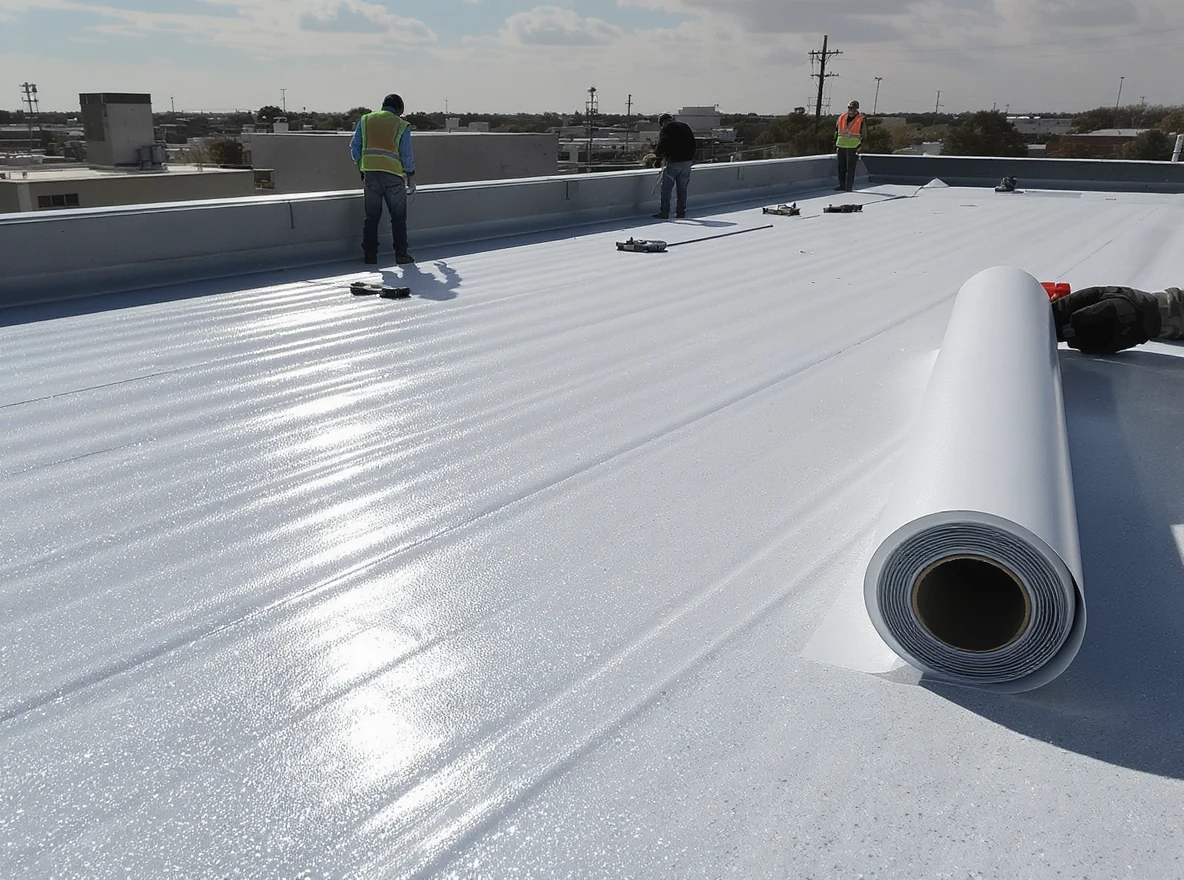
80-Mil TPO for the Roughest Exposure in the River Valley
Eighty-mil is the thickest TPO sheet we install, and we do not recommend it by default. It earns its place on a shortlist of Fort Smith roofs: manufacturing plants with heavy rooftop equipment, buildings that have already taken hail damage on a thinner membrane, and structures near Ebbing Air National Guard where new construction activity means more roof traffic during and after the build.
What the Extra Mils Buy
Going from 60-mil to 80-mil adds roughly a third more material thickness, and that extra body shows up mainly in two places: impact resistance and puncture resistance. On a manufacturing roof where maintenance crews are up on the deck regularly moving equipment, dropped tools and dragged hardware puncture thin membrane faster than thick membrane. We have replaced sections of 45-mil and 60-mil roofs punctured by exactly that kind of routine wear, and the repair cost over a roof's life can eat into any savings from the thinner sheet.
Hail resistance improves with thickness for the same reason armor gets thicker where it needs to stop more force , more material between the weather side and the reinforcing scrim means a given hailstone impact is less likely to breach through to the fabric layer. On buildings that have already had hail claims on a 45-mil or 60-mil roof, moving up to 80-mil at replacement time is a reasonable response, and we say so plainly when an owner asks whether it is worth it.
Wind Uplift on Larger Roof Areas
Distribution buildings near ArcBest's Fort Smith terminal and along the I-40 corridor tend to have large, open roof areas with long unbroken field runs. Wind uplift design pressure increases at corners and perimeters regardless of membrane thickness, but a heavier sheet resists the flutter and fatigue that repeated wind loading causes at fastener locations in mechanically attached systems. We pair 80-mil membrane with fastening patterns engineered to the specific building's height, exposure category, and roof zone, not a one-size pattern across the whole field.
Tornado-alley wind events in western Arkansas are usually straight-line or downburst rather than direct tornado strikes, but the pressures involved are still significant on a large flat roof. We do not claim any roof system withstands a direct tornado , no commercial roof is designed for that , but properly engineered uplift resistance matters for the far more common severe thunderstorm wind events that hit every spring.
Seam Welding at 80-Mil
Thicker sheet takes more heat and more dwell time to weld properly, and we adjust welder settings and walking speed accordingly rather than running the same settings used on 60-mil. A rushed weld on 80-mil sheet can look fused on the surface while leaving a weak bond underneath, so we probe every seam and document the results as part of our own quality process, separate from any manufacturer inspection.
- 80-mil sheet thickness for maximum puncture and impact resistance
- Welder settings adjusted for heavier gauge material
- Engineered fastening patterns by roof zone and building exposure
- Reinforced detailing at curbs, penetrations, and rooftop equipment pads
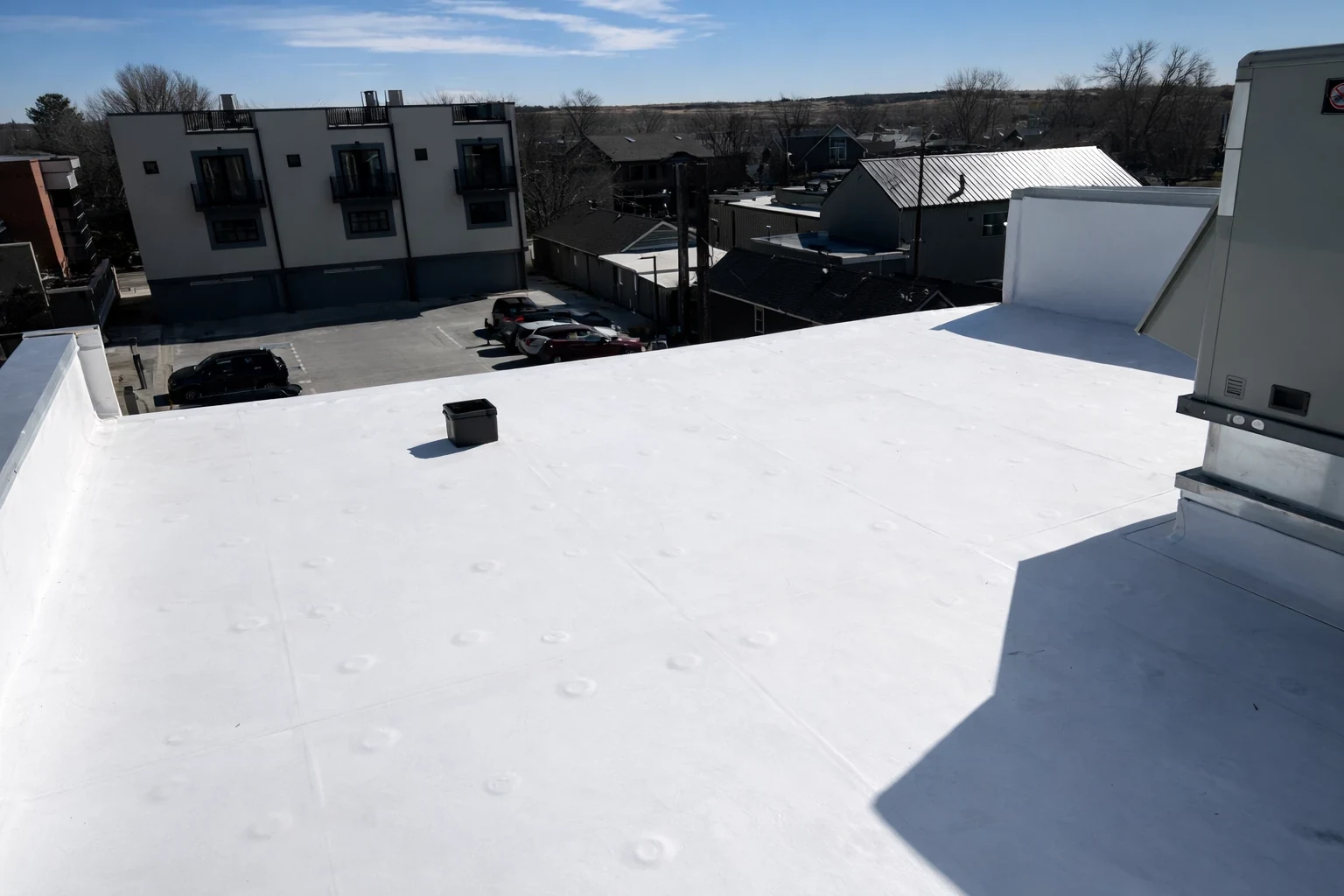
- Reflective white surface standard, gray available
- Full seam probing and documentation on every installation
Cost and When It Doesn't Make Sense
Eighty-mil TPO costs more than 60-mil, and on a low-traffic office or retail roof with modest exposure, that added cost rarely pays back in extended service life. We walk owners through the actual roof use , how much foot traffic, what kind of equipment, hail history at that specific site , before recommending 80-mil, and on plenty of Fort Smith buildings we recommend 60-mil instead because it is the better value for that roof's actual conditions.
Humidity and Long-Term Membrane Health
Fort Smith's humid summers put steady thermal and moisture cycling stress on any roof membrane. Thicker TPO resists the surface crazing and seam stress that repeated hot, humid days followed by cool nights can cause over a roof's service life. We still recommend annual inspections regardless of membrane thickness, because thickness reduces risk, it does not eliminate the need to check flashings, drains, and penetrations.
Ice-Storm Loading Considerations
Western Arkansas gets occasional ice storms, and ponded water at low points that freezes and thaws repeatedly stresses membrane and seams over time. Eighty-mil's added body handles that abrasive freeze-thaw cycling at drain bowls better than thinner sheet, which is one more reason it shows up on roofs we know have persistent drainage challenges, alongside actually fixing the drainage where we can.
Common Questions
Is 80-mil TPO overkill for a typical warehouse?
For a standard warehouse with light rooftop traffic and no unusual hail history, 60-mil is usually the better value. Eighty-mil earns its cost on roofs with heavy equipment traffic, prior storm damage, or unusually high hail exposure.
Does thicker membrane mean a longer warranty?
Not automatically , warranty terms are set by the manufacturer based on the full system, attachment method, and inspection program, not purely on sheet thickness. We document installation details thoroughly so the warranty paperwork is accurate regardless of which gauge is used.
Can 80-mil TPO be installed over an existing roof?
Only if the existing deck, insulation, and drainage pass our inspection. We do not recover over wet insulation or a compromised deck no matter how heavy the new membrane is , that just traps the existing problem under new material.
How long does an 80-mil TPO install take on a large distribution roof?
It depends on roof size, deck condition, and weather windows, but the heavier sheet does not dramatically slow installation compared to 60-mil. We sequence work to keep the building weathertight at the end of each work day, which matters more for scheduling than the membrane gauge itself.
Is 80-mil TPO a good fit for buildings near new construction activity?
Yes, particularly where nearby construction increases dust, debris, or incidental rooftop traffic during a build-out, which is relevant for buildings near the Ebbing Air National Guard construction activity. The added puncture resistance is a practical match for that kind of exposure.