Built-Up Roofing on Fort Smith's Legacy Manufacturing Buildings
A good number of the older manufacturing and warehouse buildings around Fort Smith's original industrial core , the furniture and box-manufacturing legacy that shaped this part of town , still carry built-up roofs, some decades old. We service, patch, and eventually replace these systems, and we don't push a full tear-off before it's actually warranted.
What's Actually Under the Gravel
A built-up roof is alternating layers of asphalt (or coal tar on the oldest ones) and reinforcing felt, finished with a gravel ballast or smooth cap sheet. That gravel does more than look like a finished surface , it protects the asphalt plies underneath from UV breakdown, which is why we're careful about disturbing ballast during any inspection or repair.
On buildings that have been reroofed multiple times over fifty or more years, we've found as many as three or four distinct roofing systems layered on top of each other. Figuring out what's there before recommending a repair path is not optional on these buildings.
Some of these buildings, dating back to Fort Smith's furniture and box-manufacturing era, still carry the original deck structure under all those roofing layers, and deck condition ends up being as important to the scope as whatever membrane sits on top of it.
Multi-Ply Redundancy, Aging Differently Than Single-Ply
Built-up roofing's strength is redundancy , three or four plies means a localized failure doesn't automatically become an interior leak. Its weakness is that failures are often hard to spot from the surface, since gravel ballast hides membrane condition until you pull material back to look.
We probe representative areas during any inspection rather than relying on a visual walk alone, because a built-up roof can look intact from a distance while carrying wet insulation and deteriorated felt underneath.
Tar and Logistics on Occupied Buildings
Hot asphalt kettles produce smoke and odor that owners of occupied buildings, especially food-adjacent or medical tenants, want managed carefully. We plan kettle placement, wind direction, and work timing to keep odor away from air intakes and occupied entrances, and we coordinate schedule with building management before mobilizing.
On some retrofit jobs we switch to cold-process built-up materials specifically to avoid kettle smoke on a sensitive site, trading some installation speed for a cleaner jobsite.
Phased Tear-Off on Large Roofs
A full built-up tear-off on a large manufacturing roof isn't something we do in one exposed section , we phase it to limit how much deck sits open to weather at any point, which matters given how quickly a spring storm can move through the River Valley. Phasing typically includes:
- Sectioning the roof into manageable daily tear-off zones
- Dry-in with temporary membrane at the end of every work day
- Weather monitoring tied to each day's planned tear-off area
- Staging new materials close to the active zone to limit exposure time
- Daily walk-through before crews leave to confirm no open deck remains
Deciding When Repair Still Makes Sense
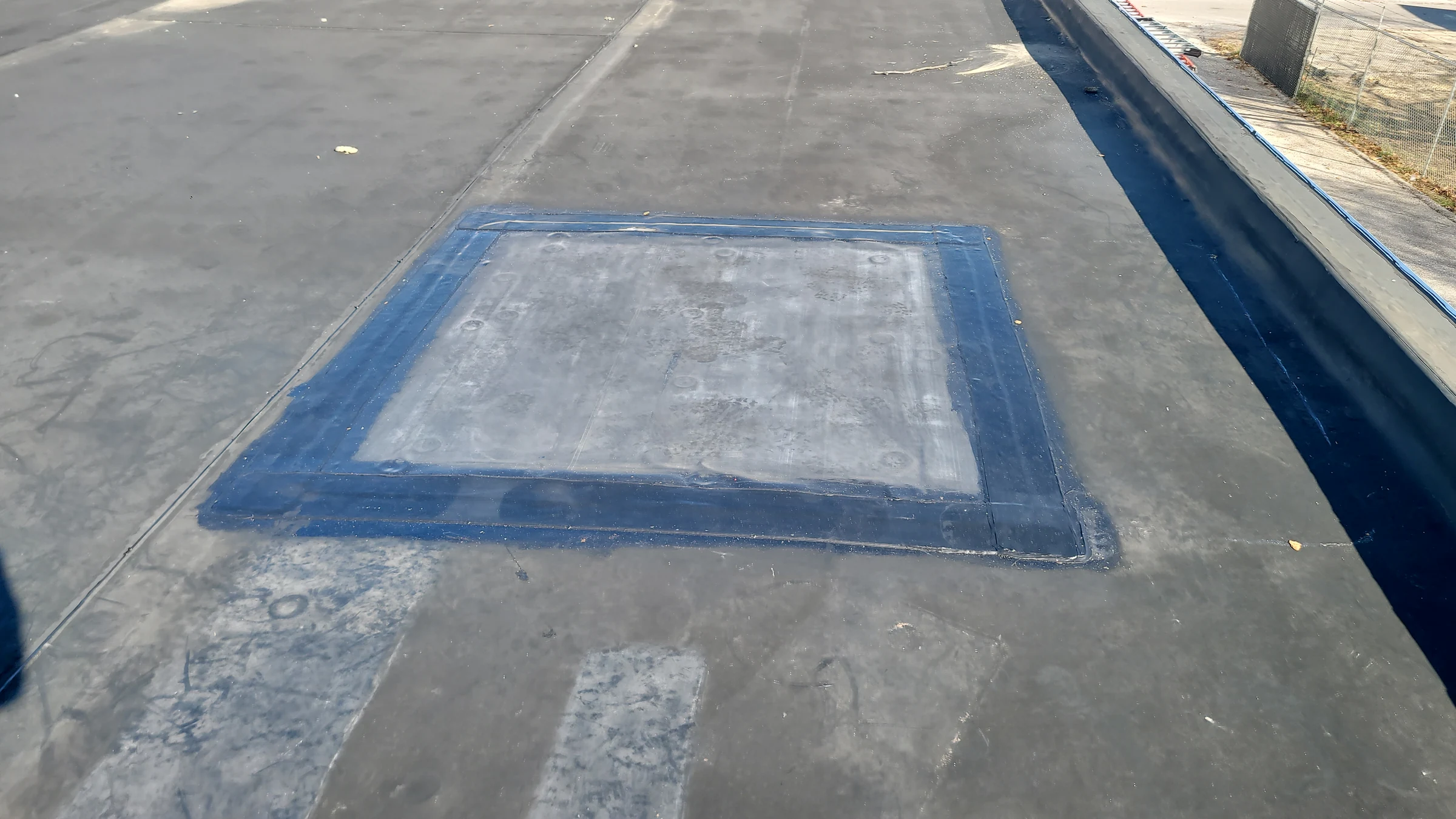
Not every built-up roof with visible wear needs replacement. Isolated blistering, localized wet insulation, or a failed section around a single penetration can often be cut out and patched, buying years of additional service life at a fraction of replacement cost. We give owners that option honestly when the roof supports it, rather than defaulting to full replacement on every call.
Managing Built-Up Roofs Across a Multi-Building Campus
Several of the older manufacturing sites we work with run multiple built-up roofs of different ages across one property, and treating them as a single maintenance program instead of separate reactive calls saves money over time. We rank buildings by risk , core sample findings, known ponding areas, drainage condition , so a facility manager can budget repairs in order of actual urgency rather than whichever roof happens to leak first.
That approach also spreads capital cost across budget cycles instead of forcing an emergency full-campus reroof when several aging systems fail close together, which is a pattern we've seen on properties that deferred built-up roof maintenance for too long.
Built-Up Roofing Questions From Fort Smith Owners
How do I know how many layers are on my roof?
We pull core samples at a few representative spots, which tells us layer count, insulation condition, and deck type without opening the whole roof. We share those findings with the owner before recommending a repair or replacement path.
Is gravel ballast still a good option for a new built-up roof?
It can be, depending on structural capacity and maintenance preferences. Smooth or granulated cap sheets are lower maintenance and easier to inspect, which we'll discuss against ballast given the specific building's structural load capacity.
Can you repair a built-up roof without disturbing the whole gravel surface?
Yes, for localized issues we pull ballast back only in the affected area, repair, and restore ballast coverage rather than disturbing the full roof unnecessarily.
Does coal tar built-up roofing need special handling?
Older coal tar systems can require different handling than asphalt built-up roofing during removal. We identify material type before planning tear-off scope, since disposal requirements differ between the two material types.
How long can a built-up roof realistically last with maintenance?
It varies widely by ply count, original installation quality, and maintenance history. Some of the oldest roofs we service have been maintained well beyond typical expectations through consistent patch-and-repair work, which shows how much regular attention extends a roof's life.