
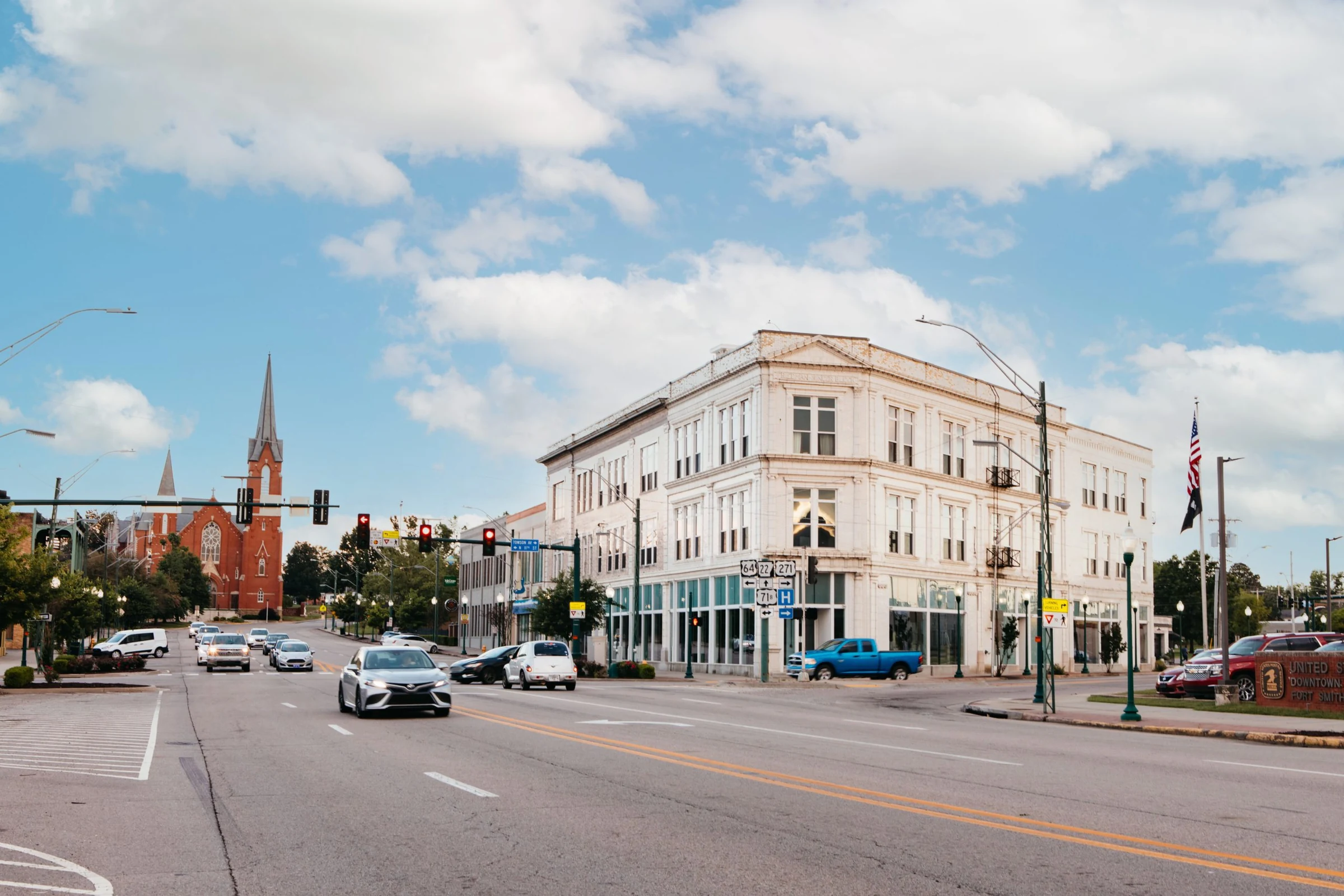
Commercial Roofers in at the Alma Interstate Interchange
A practical commercial roofing plan for at the Alma Interstate Interchange properties separates urgent leak control from repair, coating, maintenance, and replacement decisions supported by photos and condition findings. Alma grew up around canning and now runs on the interchange where I-40 meets I-49, and both eras left their mark on the city's roof stock. We work on everything from the aging processing buildings tied to the town's food-canning history to newer metal and single-ply roofs on the truck terminals and travel centers that cluster near the interstate ramps.
Food Processing and Cold Storage Buildings
Alma's identity as a canning and food-processing town runs deep, and several buildings connected to that industry are still active or partially repurposed today. These roofs often carry rooftop refrigeration units, condenser platforms, and steam venting that ages a membrane differently than a dry warehouse roof does. Grease and particulate from processing exhaust can also degrade certain coatings faster than a standard commercial environment, so we match the coating chemistry to what's actually venting onto the roof.
Cold storage roofs need vapor barrier attention that a lot of general contractors skip. When we replace a membrane over refrigerated space here, we spend extra time on the vapor retarder detail because a bad seal traps moisture inside the insulation and you don't find out until the R-value has already collapsed.
Some of the older processing buildings still carry roof penetrations from equipment that's long since been removed, capped over the years by whoever was on site at the time. We treat every abandoned penetration as a potential leak point until we've confirmed the cap is sound, since a patch job from a decade ago doesn't always hold up under a fresh membrane.
Trucking and Travel Center Roofs at the Interchange
The I-40/I-49 junction pulls a steady stream of freight traffic through Alma, and the terminals, fuel plazas, and quick-service buildings that serve that traffic are mostly low-slope metal or TPO roofs built fast to open on schedule. These roofs take a beating from constant rooftop unit cycling, since travel centers run HVAC and refrigeration nearly around the clock.
Because these properties can't afford downtime, we stage repairs to keep fuel islands and truck parking clear, and we schedule membrane work in sections so at least part of the building stays weathertight through the project. A closed travel center loses business every hour it's not operating.
Interstate Interchange Wind and Hail Exposure
Buildings sitting right at an open interstate interchange get more direct wind exposure than structures tucked into Alma's older commercial core, since there's less windbreak from surrounding development. Perimeter fastening on membrane roofs matters more here, and we check edge metal and coping condition closely during every inspection because that's where wind uplift starts.
Hail moving through the river valley toward Alma tends to arrive with the same intensity that hits Van Buren and Fort Smith, and rooftop HVAC units at truck terminals are particularly vulnerable since they sit exposed with no parapet protection on many of these low, flat buildings.
We also watch for granule loss on aging modified bitumen caps after hail events, since a granule-stripped surface accelerates UV breakdown even when the membrane itself hasn't been punctured. Catching that early with a recoat costs a fraction of what a full tear-off runs once the substrate starts failing underneath.
What We Do for Alma Properties
- Membrane replacement and coating for food-processing and cold storage roofs
- TPO and metal roofing for travel centers, terminals, and quick-service buildings
- Vapor barrier and insulation repair on refrigerated roof assemblies
- Edge metal and coping repair at wind-exposed interchange properties
- Emergency dry-in service for storm-damaged interstate-adjacent buildings
- Preventive maintenance programs for high-cycle rooftop HVAC and refrigeration units
Serving a Town Built on Two Industries
Alma's economy runs on the legacy of food processing and the newer reality of being a freight crossroads, and the buildings we service reflect both. A processing plant roof and a truck terminal roof fail for different reasons even when they're a mile apart, and we scope each job against what the building actually does rather than treating every low-slope roof the same way.
We keep material and labor logistics simple for Alma jobs by staging out of our Fort Smith base just up I-40, which keeps emergency response times short when a storm hits the interchange corridor.
Alma Roofing Questions We Hear Often
Do food-processing roofs need different materials than a standard warehouse?
Often yes. Grease, steam, and refrigeration exhaust can degrade some coatings and membranes faster than they would on a dry warehouse roof, so we match the system to what's actually venting from the building rather than defaulting to a standard spec.
Can you keep a travel center partially operating during roof repairs?
In most cases. We section the work so fuel islands and part of the building stay covered and weathertight while we address the rest, since a full shutdown isn't realistic for a 24-hour operation.
Why do interchange-area roofs seem to take more wind damage?
Buildings right at the I-40/I-49 junction have less surrounding windbreak than structures in Alma's older core, so perimeter fastening and edge metal condition matter more for wind uplift resistance.
How do you handle vapor barrier failures on cold storage roofs?
We test the existing assembly for trapped moisture before deciding between a full tear-off or a targeted repair, since a compromised vapor retarder often means the insulation underneath has already lost performance.
How quickly can you respond to hail damage on a rooftop HVAC unit?
We prioritize exposed rooftop equipment after hail events since a damaged condenser or coil can shut down refrigeration entirely. We aim to inspect and stabilize the same day the damage is reported.