Local weather forecast
Rain forecast in Fort Smith
The National Weather Service hourly forecast for Fort Smith calls for showers and thunderstorms. Forecast conditions may change as the system develops. Existing roof defects and drainage problems may become more apparent during wet or windy conditions.
Review leak-response contacts and known roof concerns. Arrange roof or drainage checks only when conditions are safe, and follow official local guidance.
National Weather Service forecast · Updated Oct 2, 2026, 4:53 AM UTC
Wind and Storm Damage Roof Insurance Claims in Fort Smith, AR
Severe thunderstorms move through the Arkansas River Valley regularly enough during spring and summer that straight-line wind and tornado-warned storms are a normal part of the season here, not a rare event. Wind claims on commercial roofs tend to be won or lost at the perimeter, where uplift pressure concentrates, and the documentation has to show that clearly for a claim to hold up.
We document wind damage as your roofing contractor, not as a public adjuster. We inspect the roof, record what failed and where, and build an accurate scope , we don't file claims or negotiate with the carrier on your behalf.
Where Wind Damage Actually Starts
Wind uplift failure almost always begins at the roof perimeter rather than the open field. Parapet caps, edge metal, and corner zones absorb the highest pressure during a straight-line wind event or the outer bands of a storm producing a tornado warning, and that's where we look first for lifted seams, pulled fasteners, or displaced coping. A field membrane can look completely intact from a distance while the perimeter has damage that puts the whole roof at risk in the next wind event if it isn't caught.
Documenting the Full Extent of Wind Damage
A torn membrane or missing section of roof is easy to document; the failures that get missed are the ones that look fine initially. A partially lifted seam or a loosened fastener can hold through the storm and fail more visibly weeks later during the next wind event. We check every perimeter run, corner, and penetration during a post-storm inspection, including areas without visible damage, and we photograph fastener condition and seam adhesion specifically, since those findings are harder to argue with than a general damage description.
Direct Wind and Storm-Cell Debris Damage
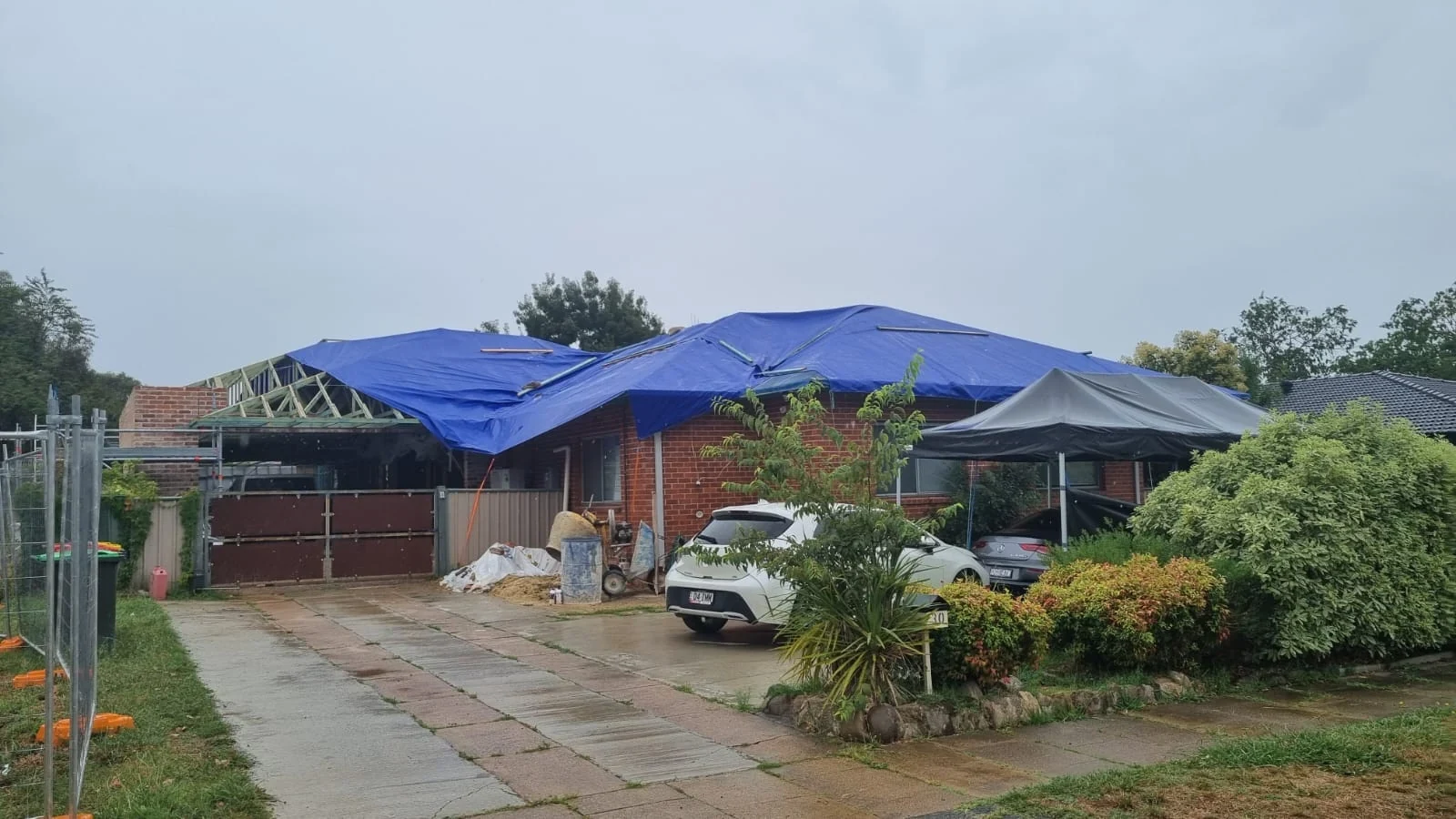
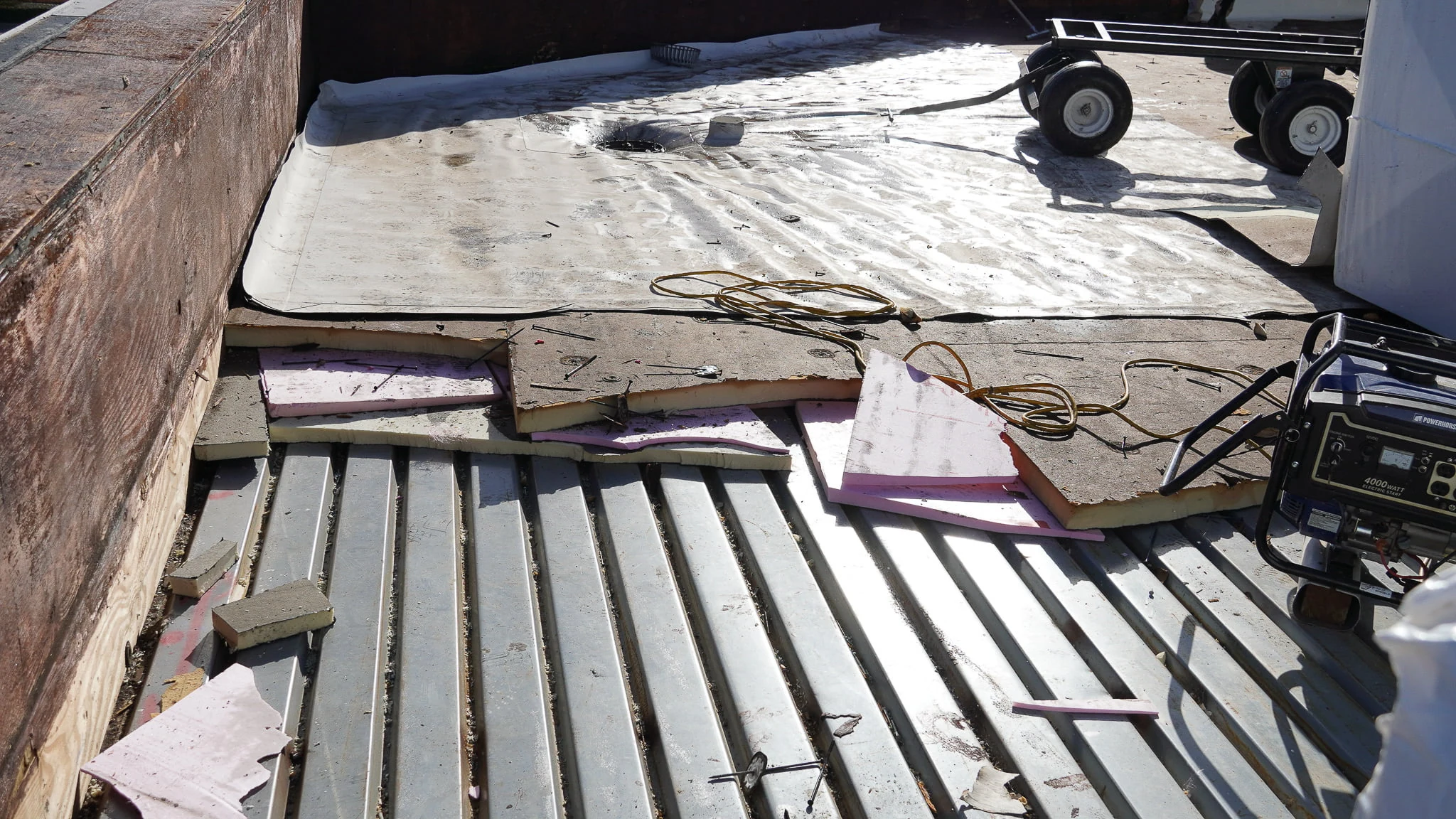
More severe wind events, including storms that carry a tornado warning through the area, can cause obvious direct damage: torn membrane, punctures from airborne debris, displaced rooftop equipment, or exposed deck sections. These situations usually call for emergency dry-in first to stop water intrusion, followed by full documentation once the extent of the damage is fully assessed. Debris fields from a severe wind event can carry material well past where the visible damage path appears to end, so we walk the full roof and perimeter grounds during a post-storm inspection rather than assuming damage stopped at the obvious edge.
Building the Scope Around Code Requirements
Wind damage repair is one of the areas where code compliance genuinely matters to claim scope. If edge metal, coping, or fastening patterns didn't meet current wind-uplift requirements before the storm, a straight repair-in-kind can leave the same vulnerability in place for the next event. We note where code-driven upgrades apply to a wind damage scope, since a repair that ignores current uplift requirements isn't actually a complete repair, and carriers generally expect code-required work to be part of the estimate.
Fort Smith's Wind Exposure by Building Type
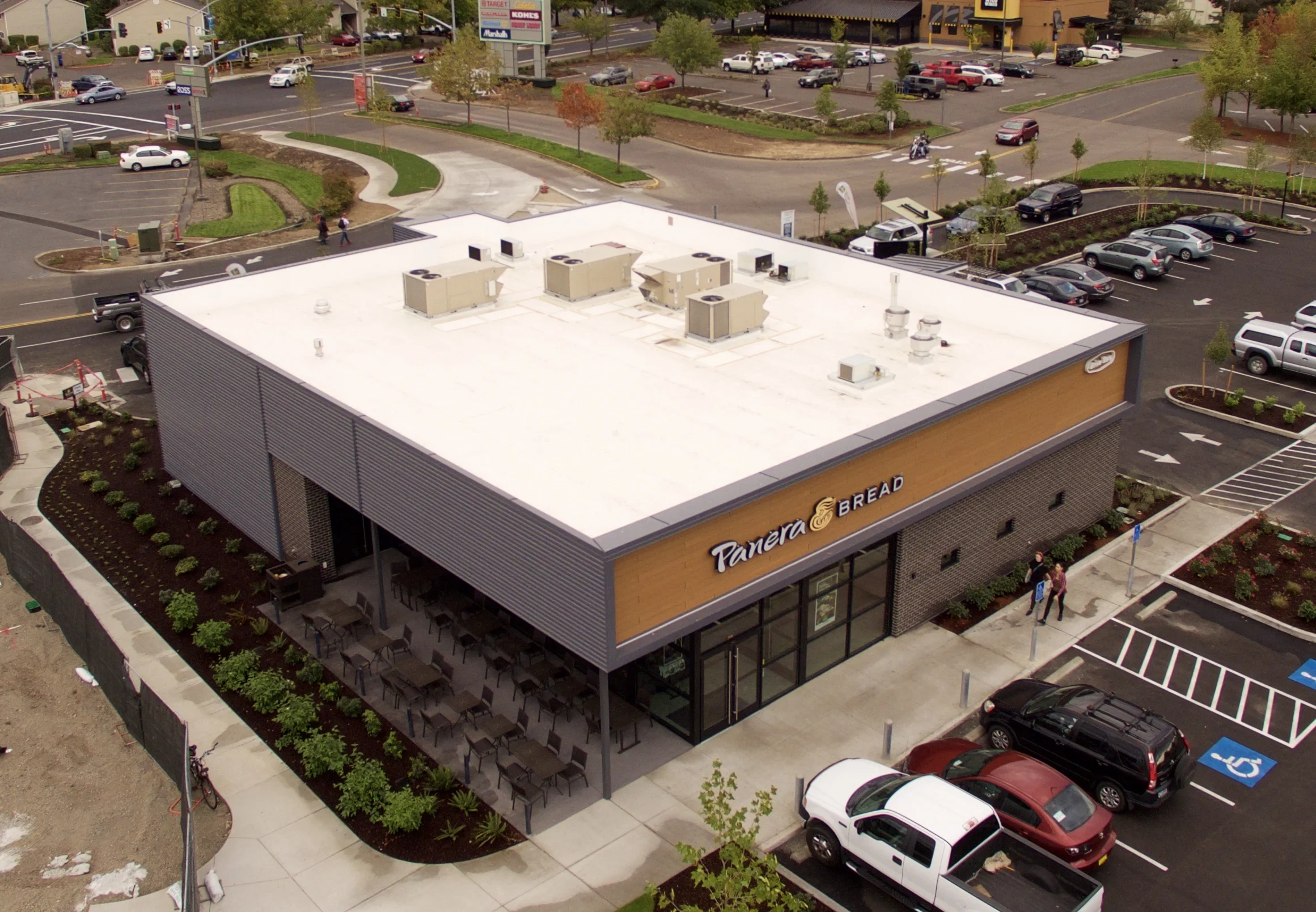
The distribution and logistics buildings clustered near the I-40/I-49 junction carry large, open roof fields where perimeter length relative to roof area is lower, but the sheer size of the roof means a full perimeter walk takes real time and can't be shortcut without risking a missed section. Downtown, the brick commercial buildings along Garrison Avenue tend to have more parapet and roof-edge detail per square foot, with multiple smaller roof sections and more corners where wind pressure concentrates. Buildings near the Air National Guard base and along the freight corridors feeding into Fort Smith see occasional debris carried well outside a storm's immediate path, which is one more reason a full-property walk matters after any significant wind event, beyond a look at the roof itself alone.
Wind and Storm Damage Claim Questions
Does wind damage always show up right after the storm?
Not always. A partially lifted seam or loosened fastener can look fine initially and fail more visibly during the next wind event, which is one reason a post-storm inspection matters even when nothing looks obviously wrong.
How is wind damage different from general roof wear for claim purposes?
Wind damage tends to concentrate at the perimeter and show a directional pattern consistent with the storm, while general wear is usually more evenly distributed and tied to age and sun exposure. We document both so the distinction is clear.
Will you help document damage for our insurance claim?
We provide thorough photo documentation and a written, factual description of what we find. We describe what's there; whether and how a claim is approved is a decision made between you and your insurance carrier.
Should we tarp the roof before or after the adjuster sees it?
If there's active water intrusion, emergency dry-in generally comes first to prevent further interior damage. We document and photograph the damage thoroughly before covering it, so the record exists regardless of when the adjuster visits.
Can a tornado-warned storm cause damage even without a direct hit?
Yes. Outer bands of severe storms carry high wind and debris well outside the most visible damage path, so we check the full roof and grounds rather than assuming damage is limited to what's immediately obvious.