Keeping Water Moving Off Fort Smith's Flat Commercial Roofs
A flat or low-slope roof depends entirely on its drainage system to do the one job gravity cannot do on its own. When a drain or scupper stops working the way it should, water does not go away, it just sits, and standing water is one of the fastest ways to shorten a roof's service life. Drain and scupper service is unglamorous work, but it prevents a disproportionate share of the leak calls we get.
What Blocks a Drain or Scupper
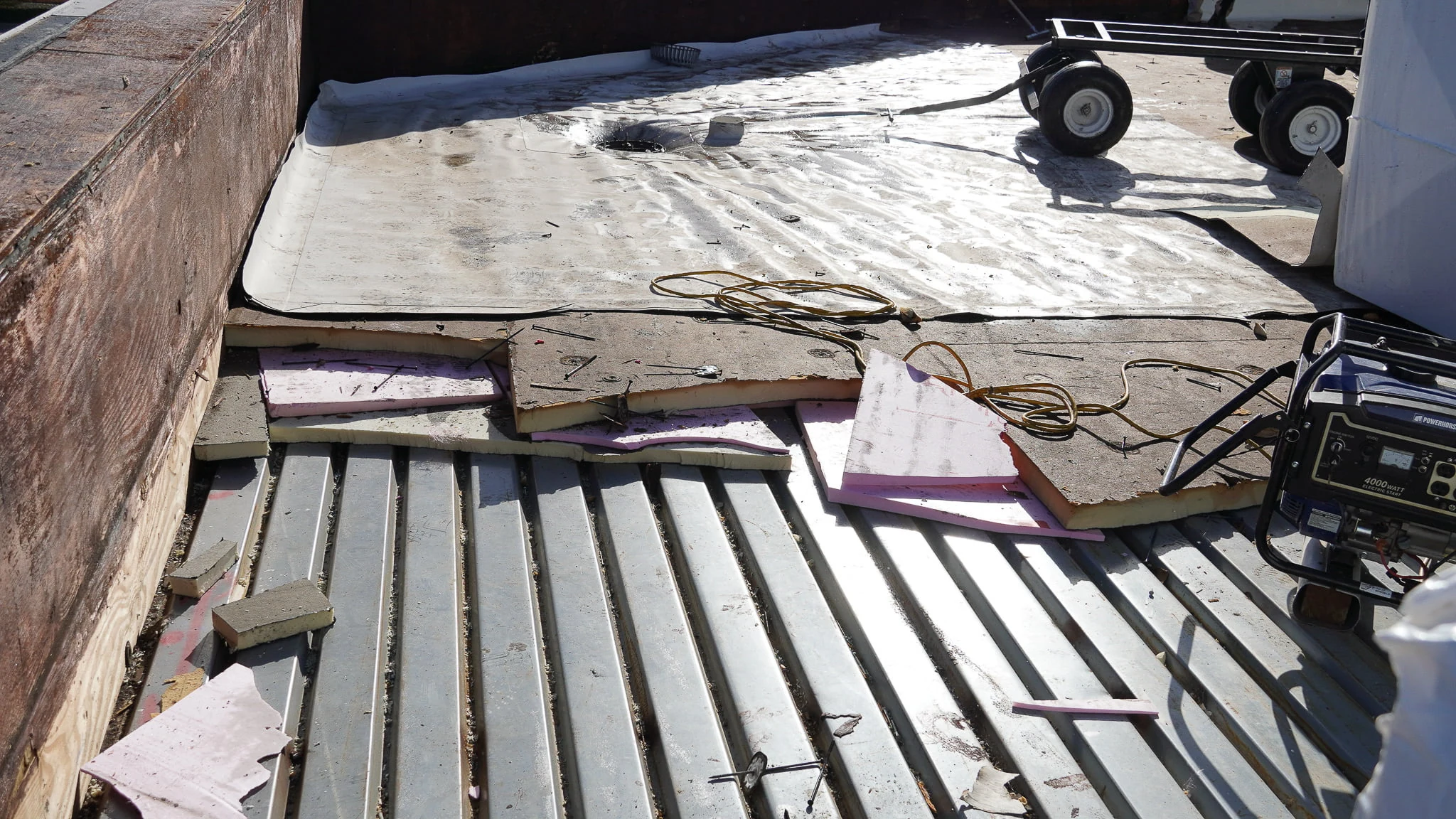
Leaves and organic debris are the obvious culprit, but on industrial and warehouse roofs we also find gravel migration from older ballasted systems, granule buildup from aging modified bitumen, and construction debris left behind from past roof work. A drain strainer that has gone missing or been damaged is another common issue, since without it, debris moves straight into the drain line where it is much harder to clear.
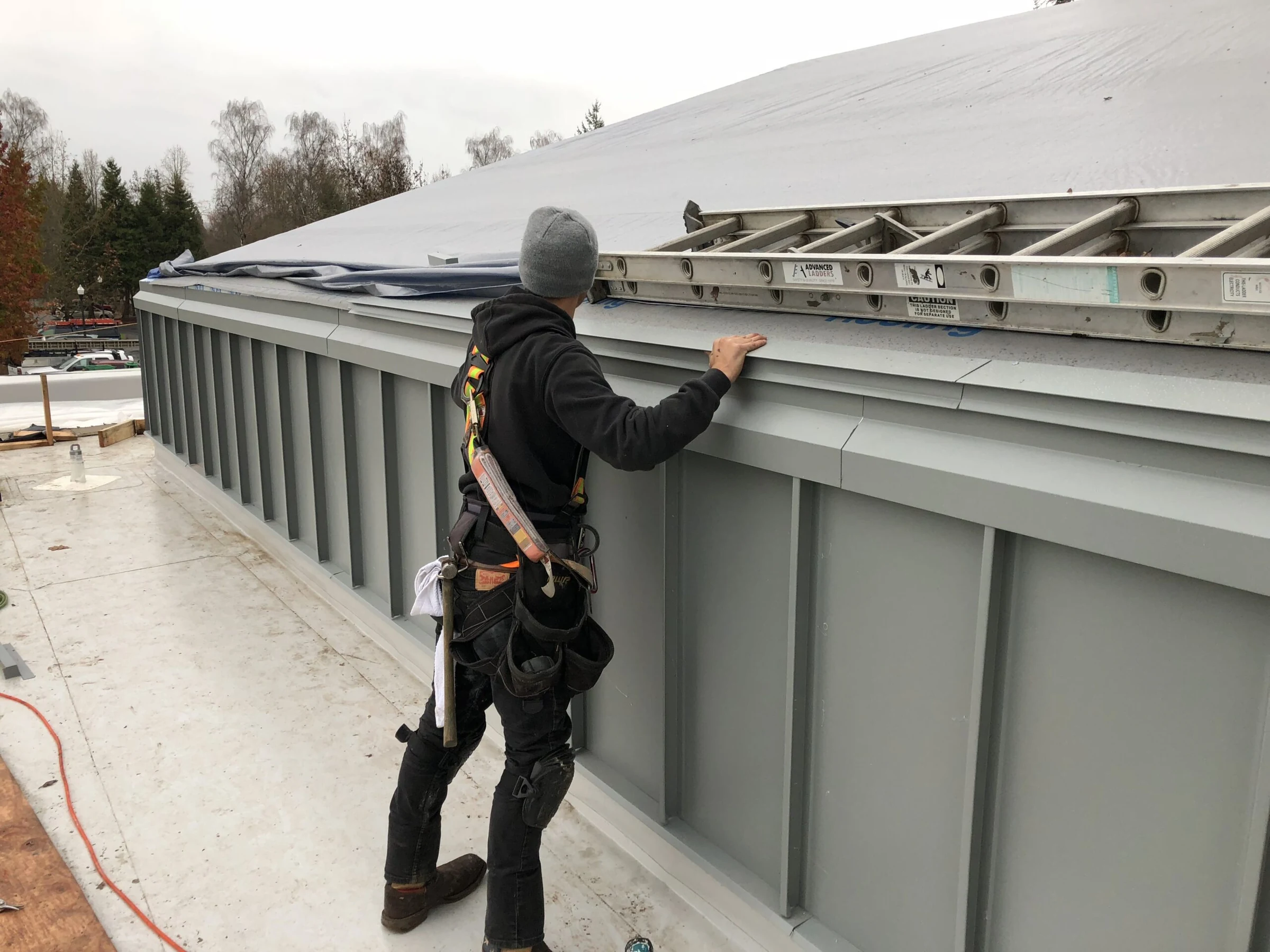
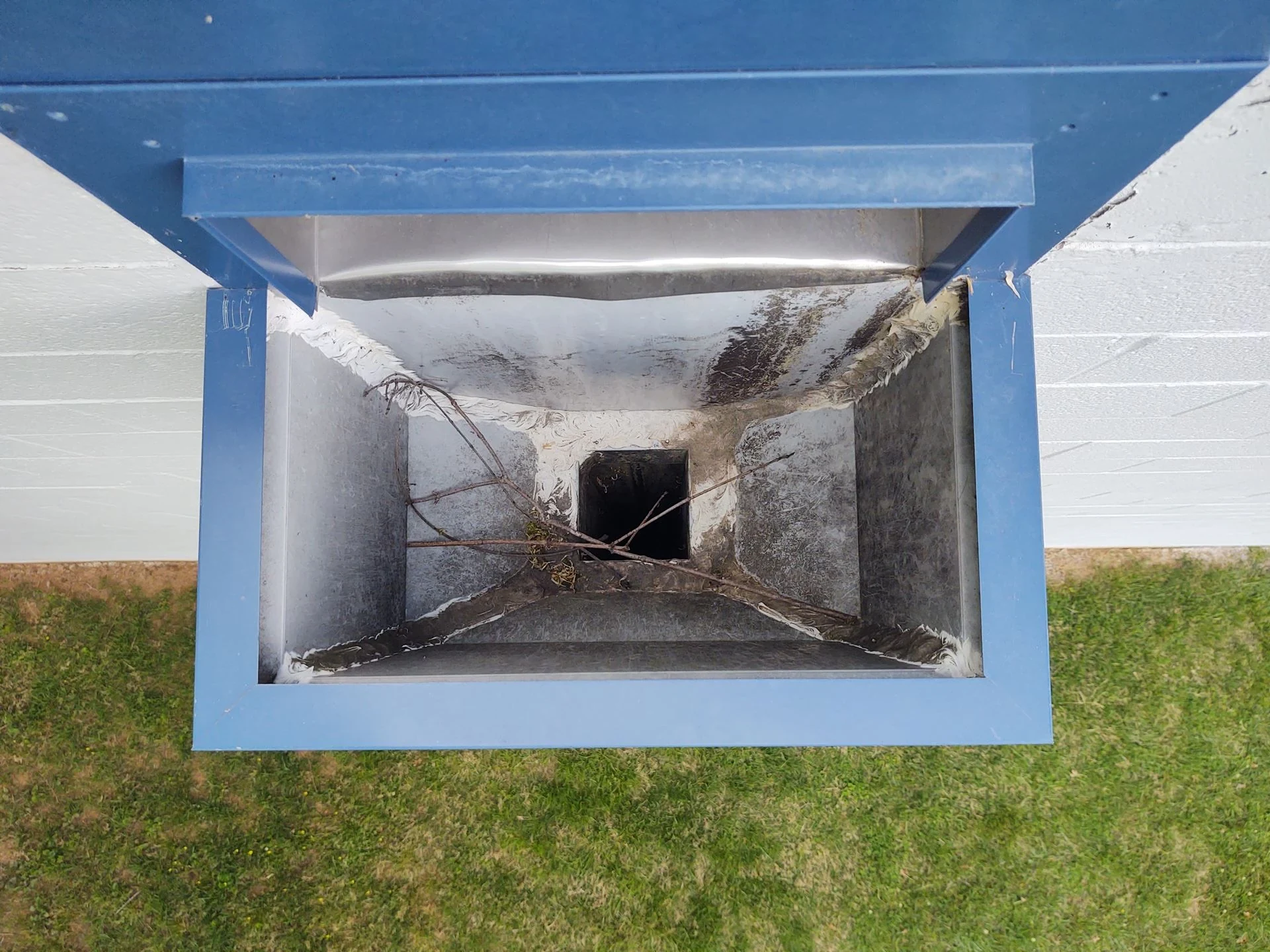
Scuppers, which drain water through the parapet wall rather than down through the roof deck, tend to clog differently: debris packs against the scupper opening from the roof side, and if the through-wall sleeve or the exterior conductor head has deteriorated, water can find its way into the wall assembly instead of flowing cleanly off the building.
Why Ponding Water Matters
A little standing water after rain is normal on most low-slope roofs and clears within a day or two. Water that sits for 48 hours or more starts to matter, because prolonged ponding accelerates membrane aging, adds structural weight the roof was not necessarily designed to carry long-term, and increases the odds that a small seam imperfection becomes an active leak. Ponding also attracts organic growth over time, which can trap moisture against the membrane surface even after the visible water is gone.
Drainage Ahead of Storm Season
Clearing drains and scuppers before spring storm season is one of the highest-value, lowest-cost maintenance items on a commercial roof here. A roof that drains properly during a heavy downpour sheds water fast and reduces the load and stress on the membrane during the exact conditions most likely to expose an existing weakness. We prioritize drain and scupper clearing as part of any pre-storm inspection visit.
Winter Ice and Drainage
Ice forming in or around a drain can block flow completely during a thaw, forcing meltwater to back up and pond at a low point that would normally clear on its own. We check for this pattern specifically after ice events, since it is a common cause of leaks that seem to appear out of nowhere during a January or February thaw.
Drainage on Larger Industrial Roofs
Large-footprint distribution and manufacturing buildings often have more drains and internal roof valleys than a typical retail box, and that means more total drain points to inspect, but also more redundancy if one drain gets overwhelmed during a heavy downpour. We map drain locations against roof low points during the initial inspection so future visits check the areas that actually matter most rather than treating every drain as equal risk.
Overflow drains and secondary scuppers, required by code as backup protection if primary drains fail, get checked with the same attention as primary drainage. An overflow that got painted over or boxed in during a past roof project defeats the purpose of having it, and we look for that specifically on older buildings that have been through several rounds of prior work.
Internal drain leaders that run down through the building interior add another layer of risk, since a failed connection at the drain body can leak into occupied space below without ever showing up as visible ponding on the roof itself. We check the drain body seal and clamping ring condition as part of any thorough drainage inspection, beyond the strainer sitting visibly on top.
What Drain and Scupper Service Includes
- Full inspection of all roof drains, scuppers, and overflow provisions
- Clearing of debris, gravel migration, and blockages from drain bodies and lines
- Strainer and drain bowl repair or replacement where damaged or missing
- Scupper sleeve and conductor head inspection for wall-cavity water intrusion risk
- Ponding water assessment and documentation of any recurring low points
- Recommendations for tapered insulation or sump modification where ponding is chronic
Drainage Questions From Fort Smith Facility Managers
How much standing water is actually a problem?
Water that clears within a day or two after rain is generally normal. Ponding that persists for 48 hours or longer is worth addressing, since it accelerates membrane wear and adds sustained structural load.
How often should drains and scuppers be cleared?
At minimum ahead of spring storm season and again before winter, with additional checks after any significant storm that could have pushed debris into the drainage system.
Can a clogged drain cause a leak somewhere else on the roof?
Yes. Water that cannot reach its intended drain will find the nearest low point or seam weakness instead, which is sometimes well away from the blocked drain itself.
What causes chronic ponding that clearing debris does not fix?
Chronic ponding at the same location after every rain usually points to a structural low spot or inadequate slope to drain, which debris clearing will not resolve. That situation typically needs tapered insulation or additional drainage capacity.
Do scuppers need different maintenance than roof drains?
Yes. Scuppers route water through the wall rather than down through the deck, so the exterior conductor head and through-wall sleeve need inspection in addition to the roof-side opening, which a standard drain does not require.